Key Takeaways
- Healthcare costs are still rising - but unevenly. Medicare premiums and deductibles are up in 2026, while some caps and average plan premiums are improving.
- Drug costs remain a bright spot. Part D protections continue to expand, including a modestly higher out-of-pocket cap and broader negotiated pricing.
- Planning matters more than ever. Income thresholds, benefit design changes, and plan availability can materially affect retirement cash flow.

Medicare continues to evolve and 2026 brings a mix of higher premiums, improved protections, and subtle shifts that can meaningfully affect retirement budgets. For investors who think of healthcare as a controllable but not static expense, these updates reinforce why Medicare planning deserves a place alongside taxes, withdrawals, and Social Security strategy.
Below is a practical breakdown of what’s changing and how to factor these updates into a forward-looking retirement plan.
Medicare Part D: Prescription Drug Coverage Continues to Improve
Medicare Part D, which covers outpatient prescription drugs through private insurers, continues its transformation under the Inflation Reduction Act.
One of the most important features, the annual cap on out-of-pocket drug costs, remains in place. After debuting at $2,000 in 2025, the cap increases slightly to $2,100 in 2026 and will continue to adjust annually. This cap effectively replaces the old “donut hole,” which has now been fully eliminated.
Other Part D enhancements continue as well:
-$35 monthly caps on covered insulin.
-No-cost recommended vaccines.
-Negotiated pricing for select high-cost drugs.
While plan premiums vary widely, average stand-alone Part D premiums are expected to decline in 2026, helped in part by a federal premium stabilization program. Although subsidies under this program are smaller than in 2025, most enrollees remain in participating plans.
The maximum Part D deductible increases to $615 for 2026, though many plans offer lower, or even zero, deductibles.

WealthTrace planning tip: Prescription costs are notoriously hard to estimate. WealthTrace allows you to model healthcare expenses separately from general inflation, making it easier to stress-test retirement cash flow under different drug-cost scenarios.
Medicare Advantage: Slight Cost Relief, Ongoing Plan Changes
Medicare Advantage (Part C) plans bundle Parts A and B, and usually Part D, into a single private plan, often with extra benefits like dental or vision coverage.
For 2026:
-Average Medicare Advantage premiums decline slightly.
-The maximum out-of-pocket limit falls to $9,250, down from $9,350 in 2025.
-Total plan availability dips marginally but remains robust nationwide.
That said, the Medicare Advantage market remains dynamic. Some insurers are exiting certain regions or adjusting benefit designs, including changes to provider networks and cost-sharing structures.
Medicare Part B: Premiums and Deductibles Rise
Medicare Part B, which covers outpatient and physician services, sees one of the most noticeable increases in 2026.
-The standard Part B premium rises to $202.90 per month.
-The annual Part B deductible increases to $283.
Most enrollees have Part B premiums automatically deducted from Social Security.
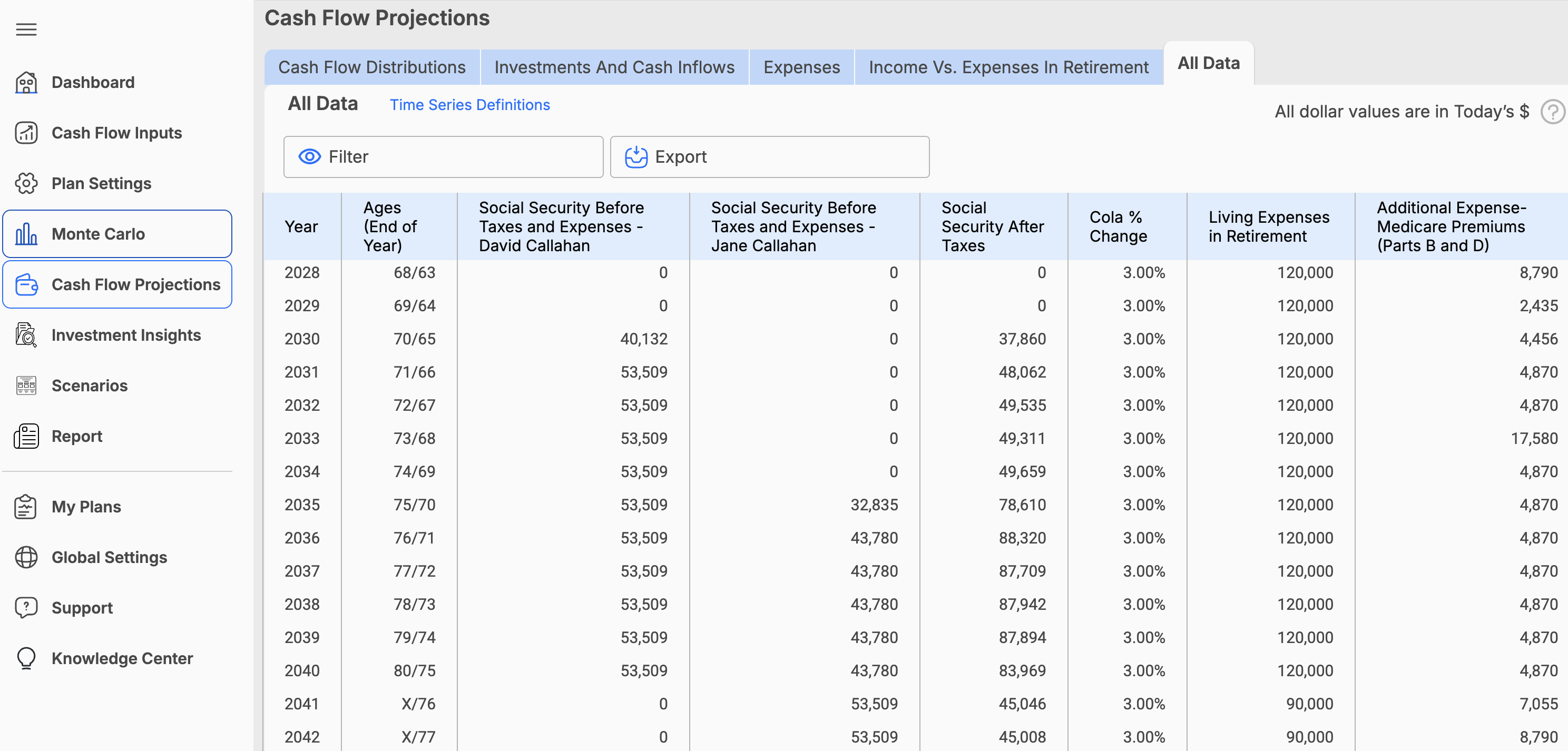
WealthTrace planning tip: Healthcare costs tend to rise faster than Social Security benefits, as COLA adjustments often fail to keep pace with healthcare inflation. WealthTrace automatically calculates Medicare premiums and separates them from Social Security income and living expenses, so you can see how much real purchasing power remains each year.
Medicare Part A: Higher Deductibles and Copays
Medicare Part A, which covers hospital and inpatient care, is premium-free for most beneficiaries. However, cost-sharing continues to rise.
For 2026:
-The Part A inpatient deductible increases to $1,736 per benefit period.
-Daily hospital copays rise for extended stays.
-Skilled nursing facility copays increase to $217 per day for days 21–100.
Because Part A deductibles apply per benefit period, not per year, multiple hospitalizations in one year can significantly increase out-of-pocket costs without supplemental coverage.
Medigap: Stability, with Important Eligibility Rules
Medigap plans continue to play a key role for retirees seeking predictability. However, eligibility rules remain unchanged:
-Plans C and F are still unavailable to those newly eligible for Medicare after 2020.
-Plan G remains the closest alternative for comprehensive coverage.
Premiums generally rise annually, and switching plans may require medical underwriting.
If a Medicare Advantage plan exits your area, you may qualify for guaranteed-issue Medigap enrollment, an important safety valve for retirees.
High-Income Surcharges (IRMAA): Thresholds Rise Again
Income-related monthly adjustment amounts (IRMAA) affect higher-income Medicare beneficiaries by adding surcharges to Parts B and D.
For 2026:
-The first IRMAA threshold increases to $109,000 for single filers.
-Surcharges rise across all income brackets.
-Part B premiums with IRMAA range up to $689.90 per month.
-Part D surcharges range up to $91 per month.
These surcharges are based on tax returns from two years prior, making tax planning and income timing especially important.

WealthTrace planning tip: Medicare premiums are determined by annual MAGI and can change materially over time. WealthTrace recalculates MAGI on a year-by-year basis, incorporating projected RMDs, Roth conversions, investment income, and other retirement income sources. This enables forward-looking IRMAA analysis and scenario comparison, allowing users to quantify how income decisions impact Medicare premiums.
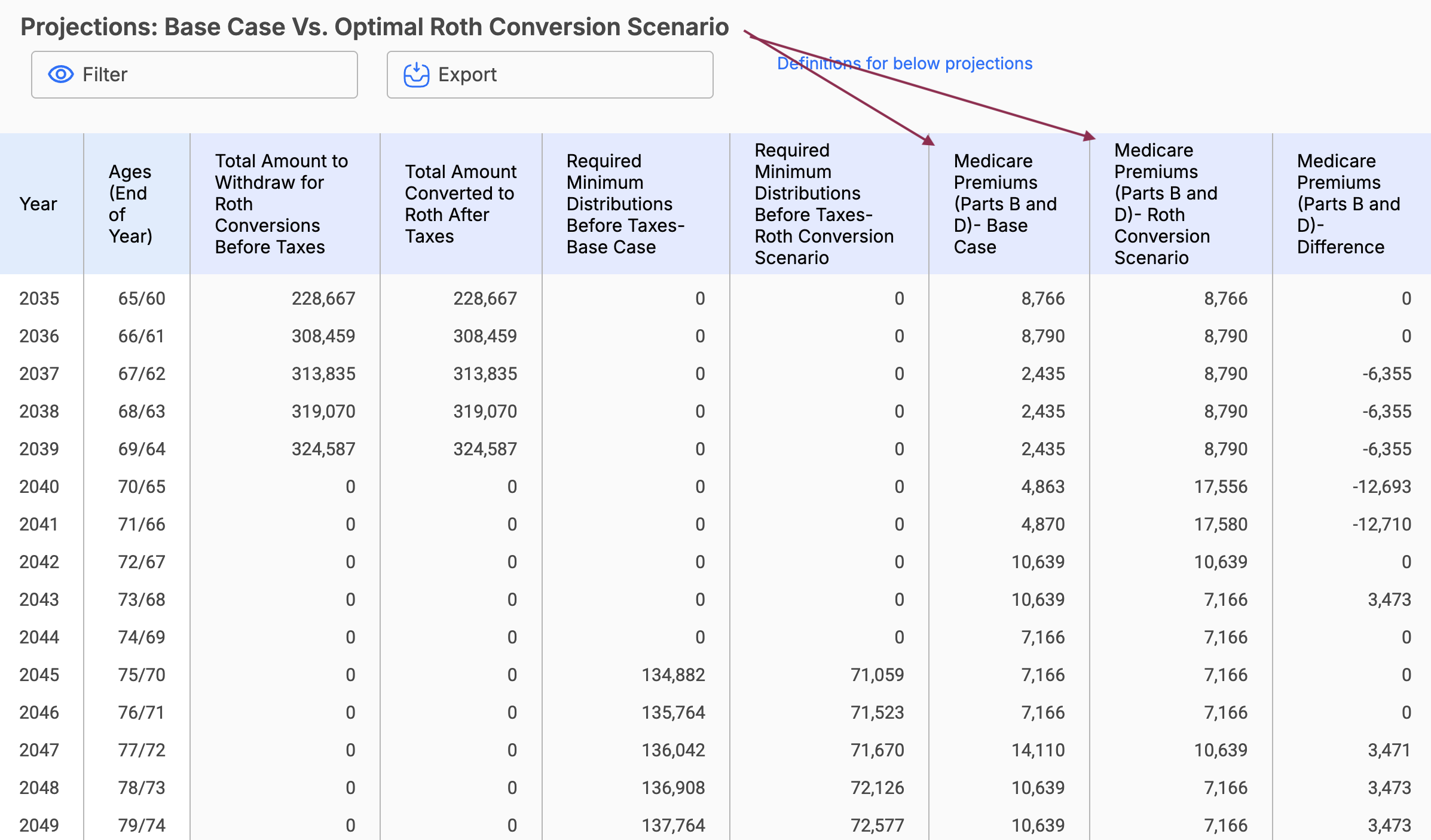
In Roth conversion scenarios, WealthTrace incorporates Medicare premiums and shows how IRMAA affects the overall cost and outcome of a conversion.
Bottom Line: Medicare is a Planning Variable, not a Footnote
Medicare in 2026 reflects a familiar pattern: gradual cost increases paired with targeted improvements. Drug coverage continues to strengthen, while premiums and deductibles quietly climb.
For investors, the takeaway is clear, Medicare decisions affect cash flow, tax exposure, and lifestyle flexibility throughout retirement. Treating healthcare as a dynamic planning variable, not a fixed expense, can materially improve long-term outcomes.
Do you know how health care costs and Medicare premium increases will impact your retirement situation? If you aren’t sure, sign up for a free trial of WealthTrace to build your financial and retirement plan today.